What Is IFRS 16? How Lease Accounting Impacts EBITDAaL and Telecom Stocks
IFRS 16 changed lease accounting by bringing most leases onto company balance sheets. Learn why EBITDAaL is important for telecom investors and how it provides a clearer view of operating performance.
What Is IFRS 16? Why EBITDAaL Matters for Telecom Investors
IFRS 16 is an international accounting standard that changed how companies report leases in their financial statements. Introduced on 1 January 2019, it significantly affected industries with large lease commitments, particularly telecommunications companies that rely on leased towers, network infrastructure, retail locations and data centres.
What Changed Under IFRS 16?
Before IFRS 16, companies generally classified leases as either operating leases or finance leases.
- Operating leases: Rental payments were treated as operating expenses and recorded directly in the income statement.
- Finance leases: The leased asset and related liability were recognised on the balance sheet.
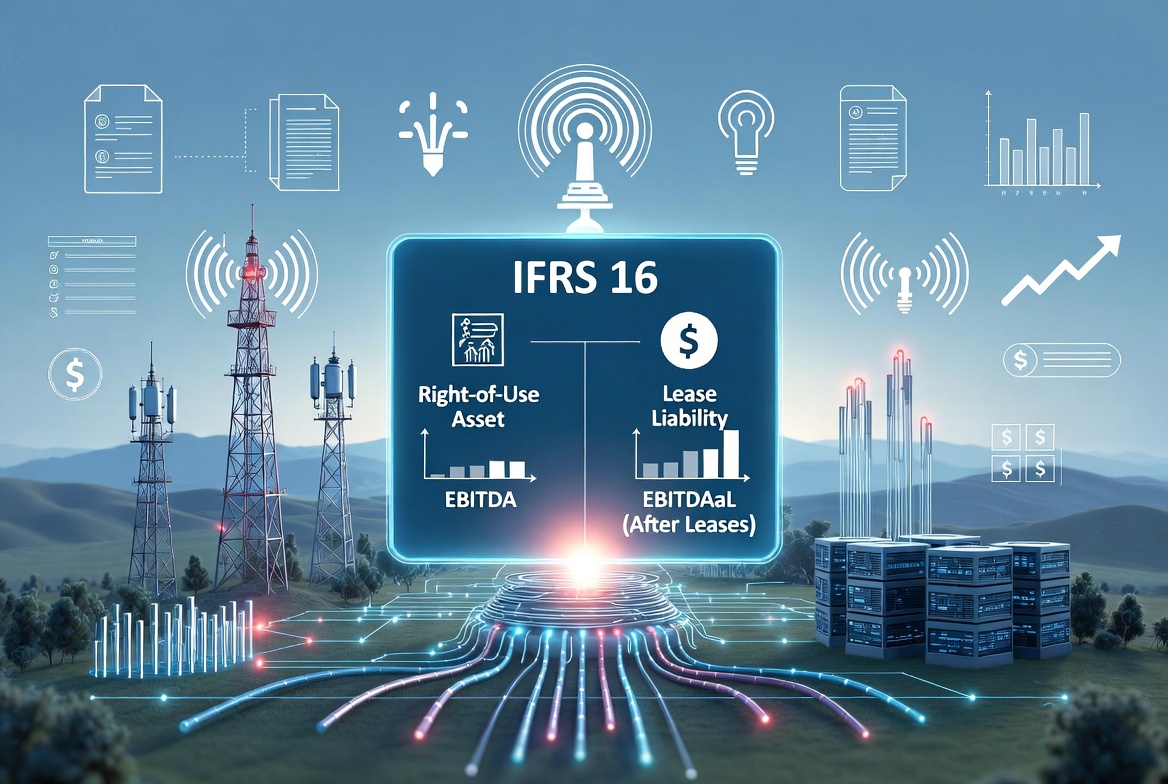
IFRS 16 largely removed this distinction for lessees. Most leases are now recognised on the balance sheet through:
- Right-of-use assets: Representing the company’s right to use the leased asset.
- Lease liabilities: Representing the obligation to make future lease payments.
How IFRS 16 Changes EBITDA
The introduction of IFRS 16 changed the way lease costs appear in financial statements.
Previously, rental payments reduced operating profit and EBITDA. Under IFRS 16, these lease costs are replaced by:
- Depreciation of the right-of-use asset.
- Interest expense on the lease liability.
Because EBITDA excludes depreciation and interest, reported EBITDA increases under IFRS 16 even though the company’s underlying lease payments have not changed.
This can create a distortion when comparing companies with different asset ownership strategies.
Why EBITDAaL Matters for Telecom Companies
Telecommunications companies frequently lease significant infrastructure, including:
- Mobile towers
- Network equipment
- Retail stores
- Data centres
- Office buildings
Consider two telecom operators:
- Company A owns its network infrastructure and records depreciation on those assets.
- Company B leases similar infrastructure and, under IFRS 16, records depreciation of the right-of-use asset and interest on the lease liability.
Standard EBITDA can make these companies look deceptively similar because lease costs are removed from operating expenses under IFRS 16. However, this can hide the ongoing cash drain created by Company B’s rental commitments and the difference in their long-term financial obligations.
EBITDAaL helps reveal this economic difference by incorporating IFRS 16 lease components and providing a more realistic measure of recurring operating performance after considering the cost of leased assets.
What Does EBITDAaL Mean?
EBITDAaL stands for:
Earnings Before Interest, Tax, Depreciation and Amortisation, after Leases
EBITDAaL adjusts for the modern IFRS 16 lease treatment by recognising the economic cost of leased assets through:
- Depreciation of the right-of-use asset.
- Interest expense on the lease liability.
This effectively reconstructs the impact of historical rental expenses and provides investors with a more comparable measure of operating performance.
Vodafone Example: Why This Metric Matters
In its Q1 FY27 Trading Update, Vodafone reported:
- Organic Adjusted EBITDAaL growth of 6.2%
- Reported Adjusted EBITDAaL of €2.9 billion
Using EBITDAaL allows investors to assess Vodafone’s profitability after considering the economic impact of leased infrastructure and property commitments.
IFRS 16 and Net Debt
IFRS 16 increased reported balance sheet debt because lease liabilities are now recognised as financial obligations.
However, this does not mean companies suddenly became economically more indebted. Credit rating agencies and lenders often adjusted for lease commitments before IFRS 16 by incorporating them into their own debt calculations.
Key Investor Takeaway
IFRS 16 changed the accounting presentation of leases but did not change the cash payments companies make under those leases.
For capital-intensive industries such as telecommunications, EBITDAaL provides investors with a clearer view of operating profitability by accounting for the economic cost of leased assets. It helps analysts compare businesses more accurately and understand whether earnings growth is translating into sustainable financial performance.