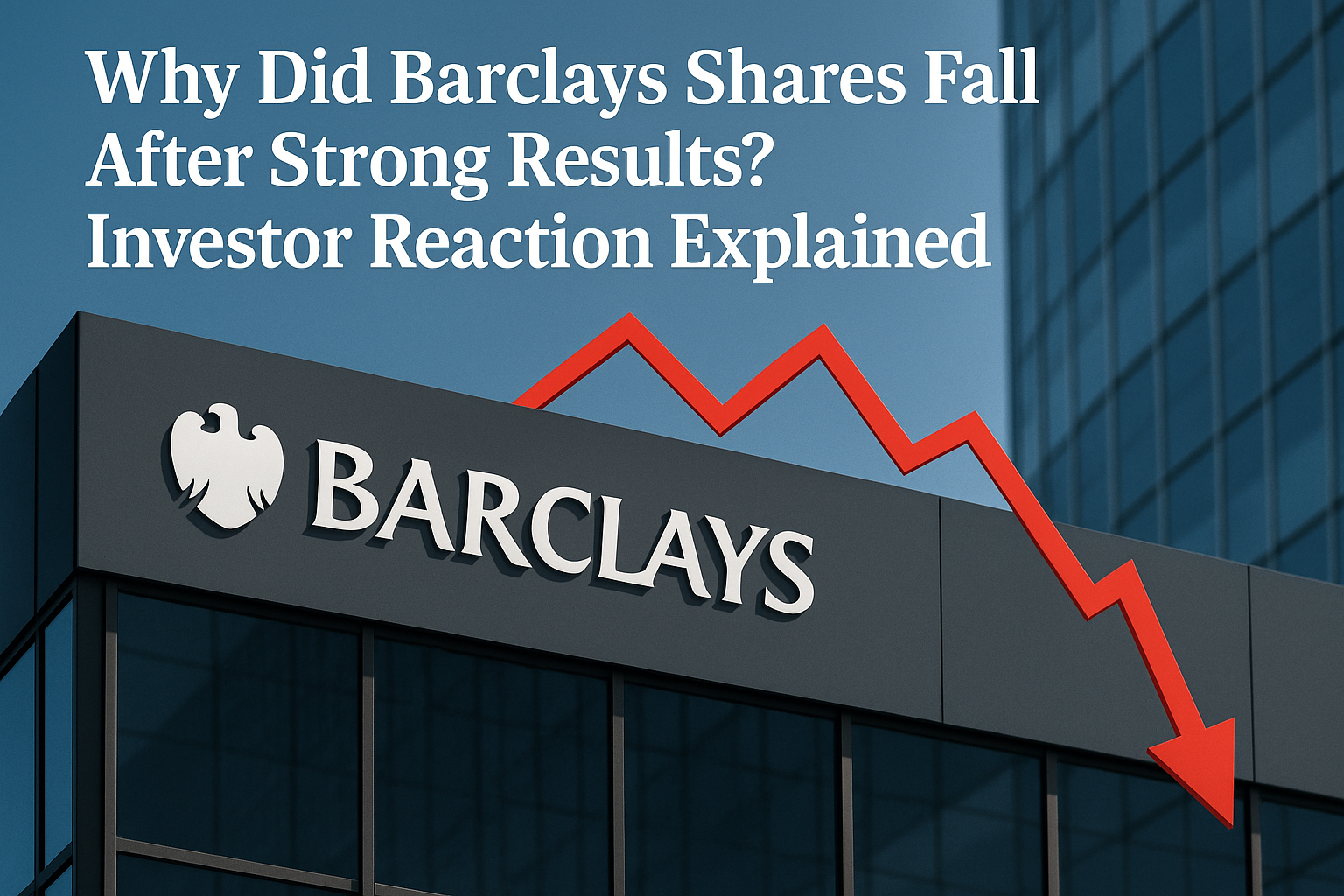
Why Did Barclays Shares Fall After Strong Results? Investor Reaction Explained
Barclays delivered strong results, but its shares still fell as investors focused on future growth, costs and expectations. Here’s why the market reacted negatively and what it could mean for other UK banks such as Lloyds.
Why Did Barclays Shares Sell Off After Strong Results?
Barclays delivered a strong set of results, yet the share price moved lower.
This may seem surprising at first glance, but it highlights an important lesson
for investors: markets often react not just to whether a company performs well,
but whether it performs better than expectations.
Good Results, But Not Good Enough?
Barclays reported a strong improvement in profits, with first-half performance
ahead of many analyst forecasts. However, investors had already priced in a significant amount of optimism following a strong run in the share price.
When expectations are high, even positive results can trigger a sell-off if
investors believe the future outlook does not justify the current valuation.
Investment Banking Performance Under Scrutiny
One of Barclays’ strongest areas has been its investment banking division,
particularly trading. While performance remained robust, investors compared
Barclays with larger US banking peers that delivered exceptionally strong
results in some areas.
The market reaction suggested that investors wanted to see continued evidence
that Barclays can compete with the very best global banks.
Rising Costs Created Concern
Another factor weighing on sentiment was the outlook for costs. Barclays
indicated that additional spending, including restructuring and efficiency
measures, would affect the near-term numbers.
Investors generally welcome investment in long-term growth, but they also want
reassurance that cost increases will translate into stronger future returns.
Profit Taking After a Strong Share Price Run
Barclays shares had already performed strongly before the results announcement.
After a significant rise, some investors chose to lock in gains when the results
arrived.
This type of selling does not necessarily mean investors believe the business
is weak. Sometimes it simply reflects the fact that expectations have already
moved ahead of reality.
The Bigger Picture: A Healthy Company Can Still See a Falling Share Price
The important point is that Barclays’ share price decline did not mean the
results were poor. The bank continued to demonstrate strong profitability,
announced further returns for shareholders and maintained confidence in its
strategy.
The market was asking a different question:
“Are these results good enough to justify further gains from here?”
What This Could Mean For Lloyds Investors
The Barclays reaction provides a useful reminder ahead of Lloyds’ results.
A bank can beat forecasts and still see its shares fall if investors are
disappointed by future guidance, margins, costs or shareholder returns.
For bank investors, the headline profit figure is only part of the story.
The key areas to watch are:
- Future profit expectations
- Net interest margin trends
- Cost control
- Dividend and buyback plans
- Management confidence in the outlook
Conclusion
Barclays’ sell-off shows that markets are forward-looking. Strong results are
not always enough to drive a share price higher — investors want to see evidence
that future growth can exceed what is already expected.
For Lloyds shareholders, Thursday’s results will not just be about what the bank
has achieved. The bigger question will be whether management can convince the
market that the next stage of growth is still ahead.