Why Is the UK Stock Market Falling Today? FTSE 100 Explained
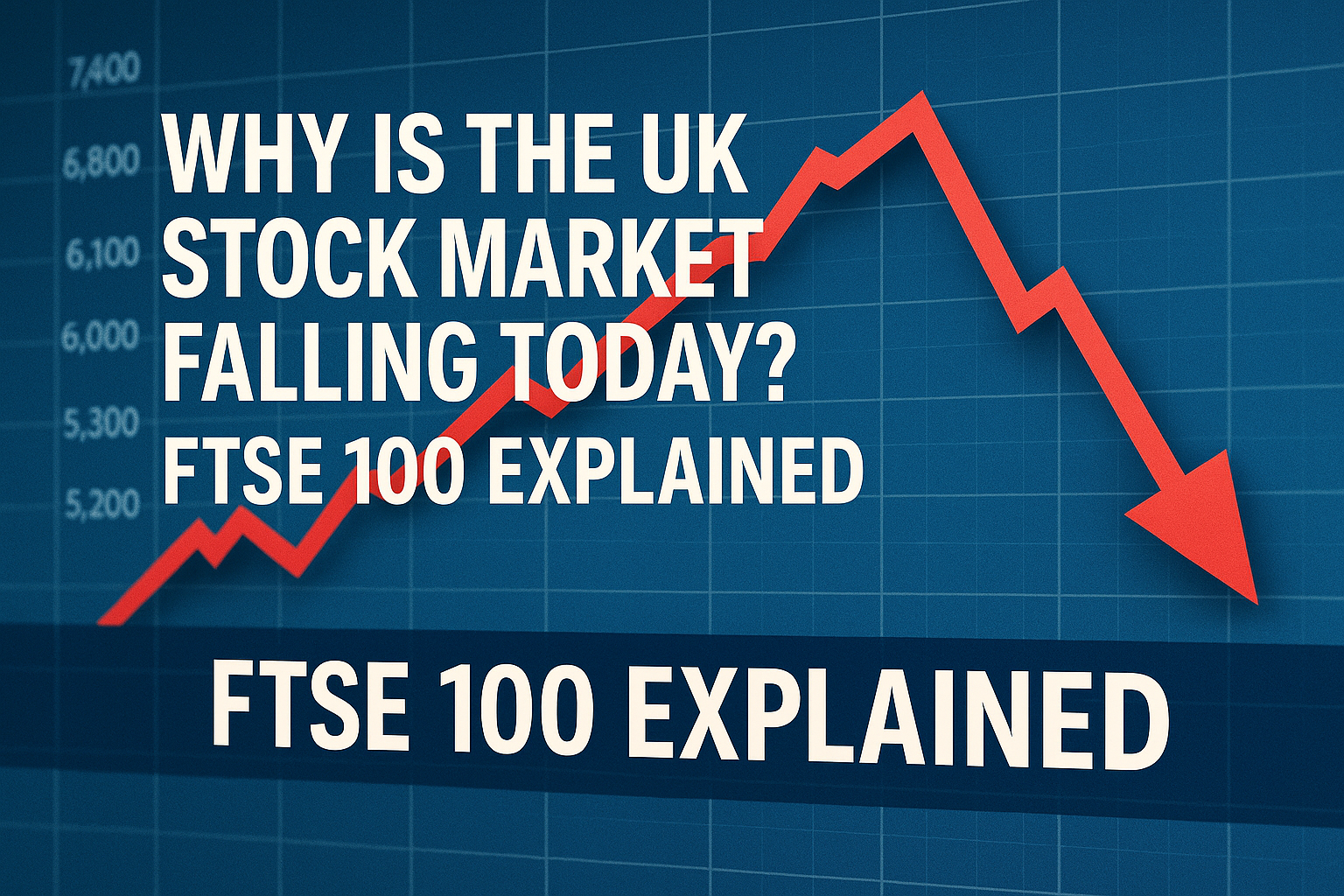
Why is the UK stock market falling today? The FTSE 100 is under pressure as banks and energy stocks decline, while investors reassess Bank of England interest rates, oil prices, inflation and the wider UK economic outlook.
Why Did the UK Stock Market Fall on Friday? FTSE 100 Explained
The FTSE 100 ended last week lower after a sharp sell-off on Friday wiped out gains made earlier in the week. The index fell by more than 1.45% on Friday, closing at around 10,659.13 points.
The week’s trading was influenced by interest-rate decisions, UK economic data, movements in oil prices and weakness in several major companies.
Bank Shares Come Under Pressure
UK banks were among the biggest contributors to Friday’s decline. Investors were assessing the outlook for interest rates after the Bank of England kept Bank Rate at 3.75%.
The decision was not unanimous. Three members of the Monetary Policy Committee voted for an immediate increase to 4%, highlighting the uncertainty surrounding the future path of UK monetary policy.
Interest-rate expectations can have a significant effect on financial stocks because they influence borrowing costs, lending conditions and expectations for bank earnings.
Oil Prices Move Lower
Oil prices also retreated from their recent highs as some concerns about supply disruptions eased.
Lower crude prices can reduce costs for consumers and businesses, but they can also weigh on the earnings outlook for major oil producers. This is particularly relevant to the FTSE 100 because companies such as BP and Shell are among the index’s major constituents.
Airtel Africa Shares Fall
Airtel Africa was another notable source of weakness. Its shares fell following reports concerning the potential size of the planned London listing of its Airtel Money business.
The move was company-specific and added to pressure within the telecoms sector.
UK Retail Sales Beat Expectations
Economic data released during the week provided a more positive picture. UK retail sales rose 0.5% in August, compared with expectations for a 0.2% decline.
The stronger-than-expected result suggested that consumer spending was more resilient than economists had anticipated.
Why the FTSE 100 Can Move Sharply
The FTSE 100 is heavily influenced by a relatively small number of large companies and sectors. Financial stocks and energy companies account for a significant part of the index, while individual companies can also have an outsized impact when their shares move sharply.
This means changes in interest-rate expectations, commodity prices or company-specific news can produce substantial movements in the index even when there has not been a major change in the overall UK economic outlook.
What Investors Will Watch Next
Attention will remain on UK inflation and other economic data, expectations for Bank of England policy, oil prices and further corporate announcements.
The interaction between these factors will continue to determine how different parts of the London market perform.
Bottom Line
Friday’s sell-off reflected pressure across several important parts of the FTSE 100. Banks were affected by changing interest-rate expectations, energy shares responded to lower oil prices, and Airtel Africa suffered a sharp company-specific decline.
Meanwhile, stronger-than-expected retail sales showed that consumer spending remained relatively resilient.
Market prices can change rapidly. This article is for general information and is not financial advice.